

Once a year — or twice, if you time it right — something extraordinary happens across the towns and orchards of Malaysia, Thailand, and Singapore. The durian drops. The season opens. The festivals begin.
Durian festivals are not quiet, polite food markets. They are loud, fragrant, joyful affairs — part harvest celebration, part cultural institution, part eating competition. In Malaysia, entire towns organise around them. In Singapore, pop-up durian shacks appear overnight on street corners, and queues form before dawn. In Thailand, the Chanthaburi Fruit Festival draws hundreds of thousands of visitors to see the largest concentration of tropical fruit — and the largest volume of durian — in the world.
Whether you are a durian fanatic planning a pilgrimage, a curious traveller who wants to understand what all the fuss is about, or a food writer looking for Southeast Asia's most immersive culinary experience, this guide tells you everything you need to know.
1. Where Are the Durian Festivals? A Regional Overview
Durian festivals are concentrated in a tight geographic band across Peninsular Malaysia, southern Thailand, and Singapore — the heartland of commercial durian production and consumption. Each country approaches the festival experience slightly differently, shaped by its own durian culture, farming traditions, and tourism infrastructure.

Malaysia — The Epicentre
Malaysia is the world capital of durian culture. While Thailand produces more durian by volume, Malaysia produces the most celebrated varieties — Musang King, Black Thorn, Red Prawn — and has the most deeply embedded durian-eating tradition. Durian festivals in Malaysia range from large-scale urban events in Penang to intimate orchard open-days in the highlands of Pahang, from street markets in Johor Bahru to weekend farmgate seasons in Balik Pulau.
What distinguishes Malaysian festivals from any other is the sheer depth of variety available. At a major Penang event, you might taste 20–30 distinct registered clones in a single afternoon — from mild introductory varieties to the most complex, bitter, and intensely aromatic premium clones on the planet.
Thailand — Scale and Spectacle
Thailand's relationship with durian is built on scale. The country is the world's largest durian exporter, and its festivals — led by the massive Chanthaburi World Fruit Festival — reflect that industrial confidence. Thai festivals tend to be more family-oriented, broader in scope (covering tropical fruits beyond durian), and more accessible to first-time visitors who might be intimidated by the intensity of a purely durian-focused Malaysian event.
Thai Monthong dominates the festival tables — sweeter, milder, and more consistent than many Malaysian clones — but orchards in the south increasingly showcase premium Thai cultivars that are slowly building their own reputation among durian connoisseurs.
Singapore — Urban Intensity
Singapore does not grow durian commercially, but it consumes it with legendary dedication. The Singapore Durian Fiesta — held across multiple hawker centres and designated durian zones during the Malaysian peak season — is one of the most concentrated and premium urban durian experiences in the world. Prices are higher than at source, but quality is typically excellent, and the accessibility of Singapore's transport network makes it an easy base for durian tourism across the region.
Travel Tip: Singapore's Geylang neighbourhood is legendary for its late-night durian stalls. Open until 2–3am during peak season, Geylang lets you eat durian under the open sky at plastic tables — an experience that is quintessentially Singaporean and genuinely unforgettable.
2. When Are the Durian Festivals? The Complete Calendar
Festival timing is tied directly to the durian harvest, which in turn is governed by the dry-spell flowering cycle — nature, not event planners, ultimately sets the schedule. This makes durian festival timing variable from year to year, though it follows a broadly reliable seasonal pattern.
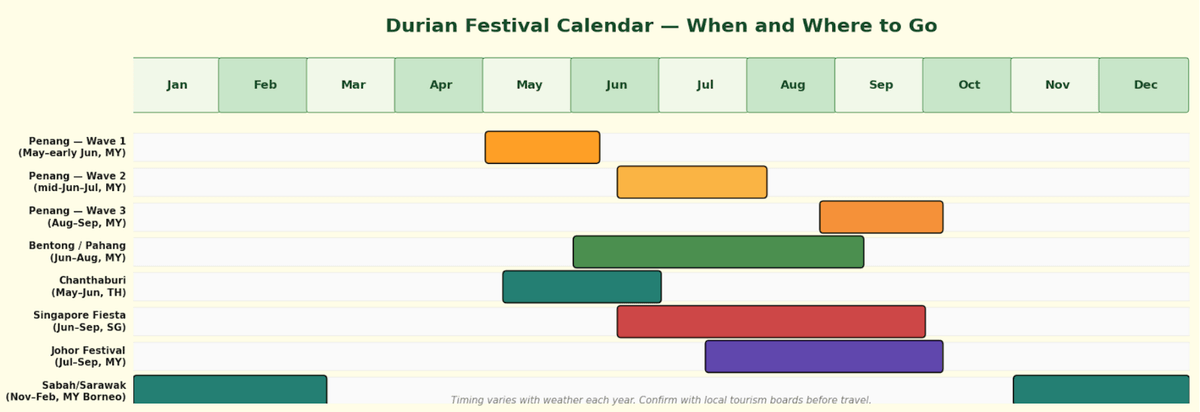
Fig. 2 — Annual durian festival calendar. Bars show typical active periods. Confirm specific event dates with local tourism boards each year.
April–June: Thailand Opens First
Thailand's eastern provinces — particularly Chanthaburi and Rayong — reach peak harvest first, typically from late April through June. The Chanthaburi World Fruit Festival is usually held in late May or early June, timed to coincide with the peak of the durian crop. This is the optimal window for visiting Thailand's durian heartland.
- Chanthaburi World Fruit Festival: Late May to early June. Arguably the largest fruit festival in Asia by attendance. Over a kilometre of stalls line the main riverside road, selling Monthong and other Thai varieties by the kilogram.
- Rayong Fruit Fair: June. More locally focused, but excellent for exploring orchards and buying direct from growers.
June–August: Malaysia and Singapore Peak
This is the main season. Peninsular Malaysia's principal crop — the one that produces Musang King, Black Thorn, and the full premium range — comes in from June through August. This is when the most festivals are active, prices are at their lowest, and variety is at its greatest.
- Penang Durian Festival: Typically June–August, with activity concentrated in Balik Pulau and Penang Hill. Orchard tours, farmgate sales, and evening durian markets.
- Bentong Pahang Durian Season: June–August. The highlands of Pahang produce some of Malaysia's most sought-after farm-grown Musang King. Bentong is a 1.5-hour drive from Kuala Lumpur and draws tens of thousands of visitors during peak season.
- Singapore Durian Fiesta: Runs concurrent with the Malaysian harvest, June–August. Various organised events supplement the year-round durian stall culture.
July–September: Johor and Later Varieties
Johor's main harvest peaks slightly later than Penang and Pahang, extending the Malaysian festival season into September. Johor festivals tend to be smaller and less tourist-facing than Penang events, but offer excellent farmgate prices and a more local atmosphere. This window also sees increased availability of Black Thorn and Red Prawn in southern Malaysia.
October–February: East Malaysia Off-Season
Sabah and Sarawak on the island of Borneo produce durian on a different seasonal cycle, with harvests running from November through February. This off-season window is the only time when fresh wild durian species — the extraordinary biodiversity of Borneo's native Durio genus — can be encountered by visitors. Several eco-lodges in Sabah offer durian tasting experiences during this period that are entirely unlike anything available on the peninsula.
3. The Top Durian Festivals — Reviewed in Detail
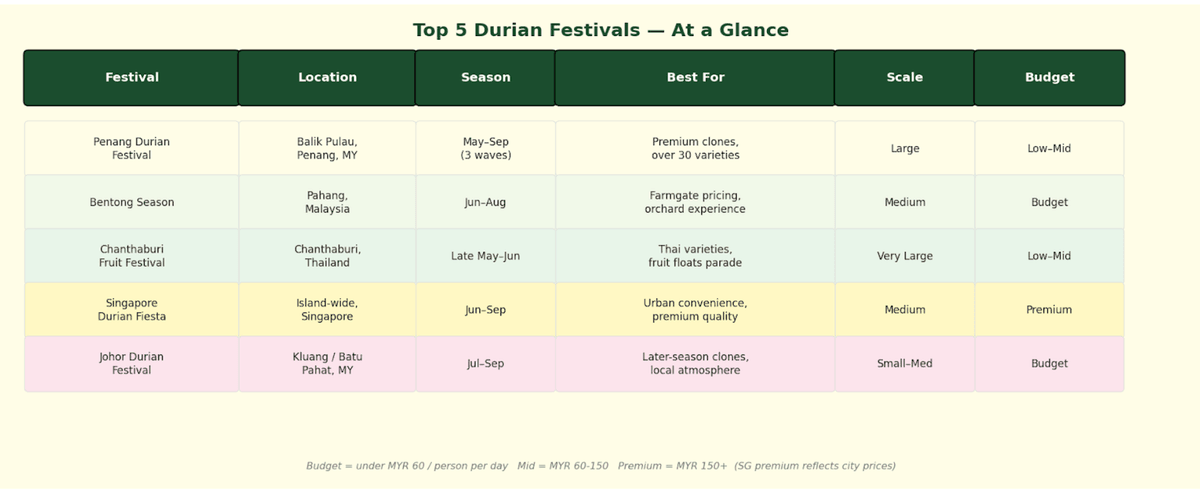
Fig. 3 — At-a-glance comparison of the top five durian festivals by key criteria.
Penang Durian Festival — The Connoisseur's Choice
Penang's reputation as Malaysia's food capital extends naturally to its durian scene. The island state produces some of the nation's most distinctive clones — Penang Red Prawn (Ang Heh), Penang D24, and locally developed variants that are rarely found elsewhere — grown in the foothills and valleys of Balik Pulau in the island's west.
The Penang Durian Festival is not a single event but rather a season-long constellation of farm open-days, market nights, and orchard visits centred on Balik Pulau. At its peak, the entire district becomes a de facto festival — every roadside stand, every farm, every provision shop is selling durian. Guided orchard walks through heritage durian groves that have been continuously cultivated for multiple generations are available through local tourism operators.
- Highlight experience: The late-evening durian session at Balik Pulau — spread on newspaper under a tree with a cold tiger beer (carefully timed before eating), choosing from a dozen varieties laid out by the farmer — is one of the most deeply satisfying food experiences in Southeast Asia.
- Getting there: Penang International Airport (PEN) with direct connections from Kuala Lumpur, Singapore, and regional cities. Balik Pulau is approximately 40 minutes by car from Georgetown.
- Budget: Budget to mid-range. Farm-direct Musang King MYR 25–45/kg at peak season. Organised tour packages MYR 80–150 per person including transport and eating session.
Bentong Durian Season, Pahang — The Pilgrimage Site
Bentong is a small town in the western foothills of Pahang that has become one of the most significant destinations in Malaysian durian culture. The area's elevation, rich clay-loam soils, and reliable rainfall pattern produce Musang King of exceptional quality — complex, thick-fleshed, and intensely fragrant — at prices that remain significantly lower than in Kuala Lumpur or Singapore.
During peak season, the road approaching Bentong from Kuala Lumpur sees traffic jams from early morning as food-seekers make the pilgrimage. Dozens of orchard operators have established farmgate selling operations along the main road and on side lanes, each with their own established regular customers and reputation. The atmosphere is festive but grounded — this is not a commercialised event but a genuine seasonal tradition.
- Highlight experience: Buying whole fruits directly from a Pahang orchard, having them cut open at the roadside, and eating surrounded by the trees that produced them.
- Getting there: Approximately 70km from Kuala Lumpur via the KARAK Highway. Most visitors drive. Private day-trip packages from KL are widely available.
- Budget: Budget-friendly. Some of the best Musang King in Malaysia available here for significantly less than in urban markets.
Chanthaburi World Fruit Festival, Thailand — The Grand Spectacle
If Bentong is a pilgrimage, Chanthaburi is a pageant. The Chanthaburi World Fruit Festival is one of the largest food festivals in Asia, held annually in the eastern Thai province that produces the bulk of the country's durian crop. The festival lines the banks of the Chanthaburi River for over a kilometre with stalls selling Monthong, Chanee, Kradumthong, and other Thai varieties alongside mangosteen, rambutan, and longkong — the full tropical fruit spectrum in overwhelming abundance.
The festival also features cooking competitions, cultural performances, beauty pageants, and agricultural exhibitions. It is a true community celebration, and the scale of it — the sheer volume of fruit on display and for sale — is breathtaking even for experienced durian travellers.
- Highlight experience: The pre-dawn wholesale market on the first morning of the festival, where Thai buyers load trucks with thousands of kilograms of fruit at prices unavailable at any other time.
- Getting there: Chanthaburi is approximately 250km southeast of Bangkok. Buses run regularly from Bangkok's Eastern Bus Terminal (Ekkamai). The drive takes 3.5–4 hours.
- Budget: Budget to mid-range. Excellent Monthong at very competitive prices. Thai fruit costs significantly less than Malaysian premium clones but the experience is unparalleled in scale.
Singapore Durian Fiesta — Premium Urban Experience
Singapore's organised Durian Fiesta is the most curated of the major events — a reflection of Singapore's general approach to food, which tends toward quality control, clean infrastructure, and premium positioning. Held across multiple sites including NTUC FairPrice Xtra locations, wet market areas, and specialist durian retailers, the Fiesta brings Musang King, Black Thorn, and premium Thai varieties into the urban Singapore food environment at the height of the Malaysian season.
Beyond the official Fiesta, Singapore's unofficial durian season — the months when the Malaysian crop is flowing and stalls proliferate across the island — is itself a kind of perpetual festival. The Geylang stretch, the stalls near Chinatown, the durian trucks in suburban carparks: all of these form a distributed festival without a single site or schedule.
- Highlight experience: A late-night session in Geylang, working through a Black Thorn and a Musang King side by side, comparing their characters, before taking the last MRT home.
- Getting there: Singapore Changi Airport (SIN) is one of the best-connected airports in the world. The entire island is accessible by MRT.
- Budget: Premium. Durian in Singapore carries a significant premium over Malaysian farmgate prices, but the ease of access and quality are excellent.
Johor Durian Festival — The Local's Choice
Johor's festival scene is less touristic and more authentic than Penang — a feature rather than a flaw for travellers who want to experience durian culture as Malaysians actually live it. The Johor season peaks slightly later than the main peninsula, from July through September, and produces excellent Black Thorn, Red Prawn, and Musang King from highland farms in Kluang, Batu Pahat, and surrounding areas.
Johor Bahru, connected to Singapore by the Causeway, makes an excellent base for festival-going. Cross the Causeway for the urban polish of Singapore, then drive 40–60 minutes into the Johor highlands for genuine farmgate durian at prices that will make Singapore-based durian lovers weep with relief.
4. What to Eat at a Durian Festival: Beyond the Fresh Fruit
A great durian festival is not just about eating fresh durian — though that is always the centrepiece. The food ecosystem that has grown up around durian in Southeast Asia is remarkably rich, and festivals are the best opportunity to explore it.
Fresh Durian — Always the Priority
Every other durian product in existence is in some way inferior to a perfectly ripe, freshly opened premium durian eaten within metres of where it fell. If you are at a festival, eat fresh durian first, before it starts to warm up, before you have eaten anything else, and before you have used your palate on anything sweet or savoury. The experience is irreplaceable.
At a good festival stall, the protocol is as follows: approach the vendor, survey the fruits available, ask to taste before committing to a whole fruit (reputable vendors always offer this), and then choose your variety based on the tasting. Do not let anyone rush this process — a good vendor understands it and expects it.
Durian Crepe Cake (Kek Lapis Durian)
The durian crepe cake — layers of thin, eggy crepes sandwiched with whipped fresh cream infused with durian paste — is perhaps the most refined dessert in the durian product canon. At its best, made with genuine Musang King flesh and proper cream, it delivers the full flavour complexity of fresh durian in a lighter, more elegant format. Look for vendors who use real fruit, not durian flavouring — the difference is immediately apparent in the colour and intensity of the filling.
Durian Mochi and Pastry
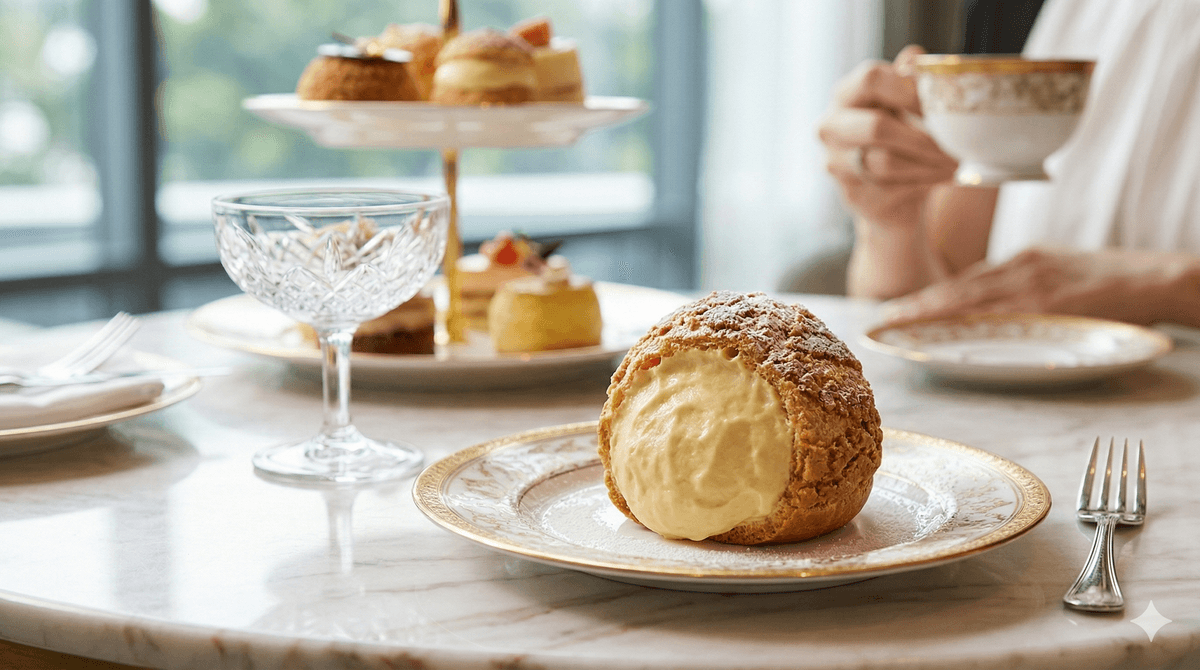
The Japanese mochi format — chewy glutinous rice cake encasing a filling — has been enthusiastically adopted by Malaysian and Singaporean pastry makers as a vehicle for durian. The contrast of the elastic, almost neutral rice shell against the intensely flavoured durian paste inside is genuinely brilliant. Choux pastry puffs and pandan crepes filled with durian custard are equally prevalent at festival markets and worth seeking out.
Durian Coffee and Beverages
The durian coffee trend — espresso or cold brew combined with durian paste, sometimes with condensed milk — has moved from novelty to mainstream in Malaysia and Singapore over the past several years. It sounds unlikely, and the combination is genuinely challenging, but at its best (a good cold brew with a small amount of high-quality Musang King paste and a little condensed milk) it is remarkable — complex, sweet, bitter, and savoury all at once. Festivals are the best place to try it from specialists who have refined the balance.
Festival Eating Strategy: Start with fresh varieties in order from mildest to most intense. Then move to cooked and processed products. Never eat durian after a heavy meal — come hungry, or come between meals. Your palate will thank you.
5. Festival Activities: What Actually Happens Beyond the Eating
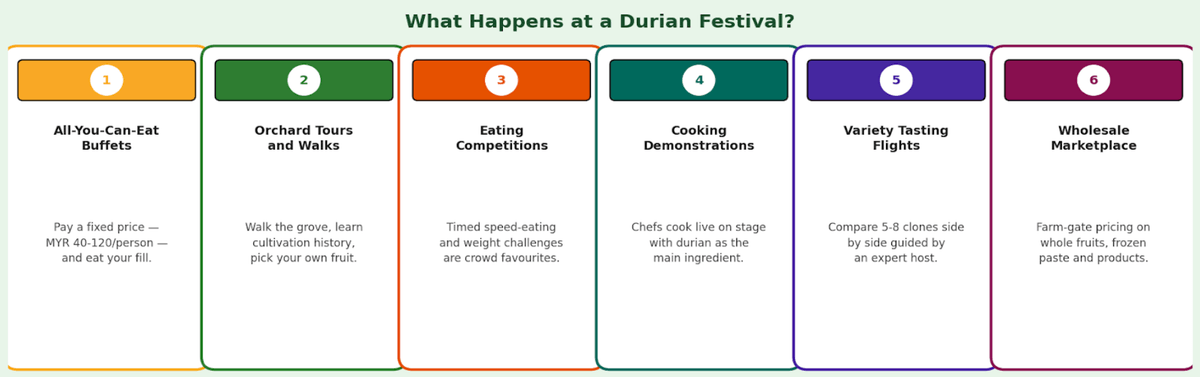
Fig. 5 — The six main activity categories at a major durian festival.
All-You-Can-Eat Durian Buffets
The all-you-can-eat durian buffet is a rite of passage for any serious durian enthusiast. Pay a fixed per-person price — typically MYR 50–120 for premium varieties, MYR 20–40 for standard festival buffets — and eat as much as you can in a set time window, usually 2–3 hours. Reputable buffet operators rotate fresh fruits throughout the session, ensuring the durian you eat near the end is as good as the durian at the beginning.
One important note on buffet strategy: pace yourself. Durian is extremely filling and rich, and the temptation to eat as much as possible to justify the price is understandable but counterproductive. Two or three fruits eaten slowly and appreciated fully is a better experience than eight fruits eaten hurriedly.
Orchard Tours and Farm Walks
The most memorable festival experiences are those that take you beyond the market stall and into the orchard itself. Guided farm walks — offered by most major festival orchards in Penang, Pahang, and Johor — show you the full durian tree lifecycle, explain how different varieties are managed, and typically culminate in an eating session directly under the trees. Some farms allow visitors to participate in the collection of naturally fallen fruit, which is one of the most viscerally satisfying aspects of the experience.
Durian Eating Competitions
Competitive durian eating is a real and enthusiastic subcultural phenomenon at Malaysian and Thai festivals. Competitions range from timed speed-eating events to weight-based contests, with winners sometimes consuming several kilograms of durian in a single session. Even as a spectator, these events are enormously entertaining — the competitive eaters' determination, the crowd's reactions, and the sheer scale of the consumption involved make for compelling watching.
Variety Tasting Flights
At the more sophisticated end of the festival spectrum — particularly at events in Singapore and at certain premium Penang orchards — structured variety tasting flights have become popular. Similar in concept to a wine tasting, these sessions take you through 5–8 varieties in a guided sequence, from lightest to most intense, with commentary from a knowledgeable guide on the characteristics of each clone. For anyone interested in developing genuine durian literacy, a well-run tasting flight is invaluable.
6. What Does a Durian Festival Cost? Prices, Budgets, and Value
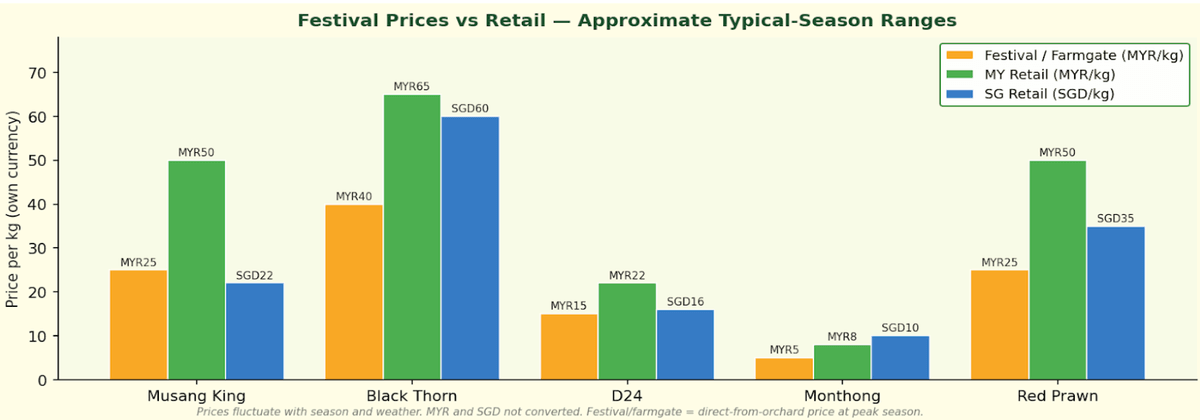
Fig. 6 — Festival prices versus typical retail prices in Malaysia and Singapore. Buying at source offers substantial savings.
Why Festival Prices Are Lower
Festival prices are lower than retail prices for a straightforward reason: you are buying closer to the source. At a Bentong farmgate or a Balik Pulau orchard, there are no distributors, no wholesalers, no cold-chain logistics costs, and no retail margin. The grower collects their fruit, opens their gate, and sells directly. The savings relative to Singapore retail can be 40–60% for premium varieties.
There is also a volume dynamic at play: during peak season, supply temporarily exceeds local demand as the crop arrives all at once, pushing prices down. In the weeks before and after peak — when supply is thinner — farmgate prices can be surprisingly close to urban retail.
How to Budget for a Durian Festival Trip
- Durian eating: Budget MYR 80–200 per person per day for a serious festival experience with multiple varieties. You can eat for much less (MYR 20–40 on Monthong or generic varieties) or much more (premium Black Thorn tasting sessions can run MYR 150+ for a single fruit).
- Accommodation: Budget guesthouses in Penang and Pahang from MYR 60–100/night. Mid-range hotels MYR 150–300/night. Kuala Lumpur as a base adds transport time but broadens accommodation options significantly.
- Transport: Car rental gives the most flexibility for orchard-hopping and farmgate exploration. Day-trip packages from KL to Bentong typically cost MYR 150–250 per person all-inclusive.
- Total budget for a 3-day Malaysian durian festival experience: approximately MYR 600–1,200 per person (USD 130–260) including accommodation, transport, and durian eating, at the mid-range.
7. First-Timer's Guide: How to Prepare, What to Expect, and What Not to Do
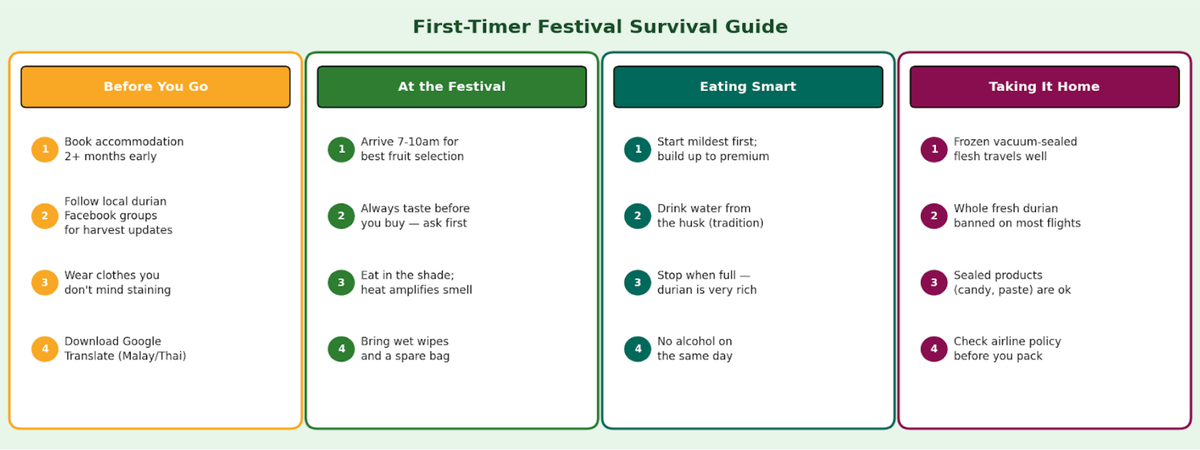
Fig. 7 — Practical checklist for first-time durian festival visitors.
Before You Go
- Book accommodation early. During peak Malaysian season (June–August), accommodation in Penang fills up weeks in advance. If visiting Bentong or the Pahang highlands on a day trip from KL, accommodation is less of an issue but transport logistics need planning.
- Check the harvest forecast. Unlike a fixed-date food festival, durian season timing varies with the weather. Follow local durian groups on social media — Malaysian durian farmers are active online and will tell you exactly when their crop is coming in. The Facebook group 'Malaysia Durian' has tens of thousands of members who share real-time harvest updates.
- Dress appropriately. Wear clothes you do not mind getting stained. Eat at tables if possible — durian juice on fabric is persistent. Bring a change of shirt for the second session of the day.
- Set realistic expectations for the smell. If this is your first time, the smell will likely be more intense than you expect. Most first-timers find the aroma less overwhelming once they start eating — the taste recalibrates the brain's response to the scent.
At the Festival
- Arrive early, particularly at popular farmgate locations. The best fruits — naturally dropped overnight — are typically available from 7–10am. By midday, the premium stock at popular sellers is often gone.
- Always taste before you buy. Any reputable vendor will offer a small taste before you commit to a whole fruit. If a vendor refuses, walk away.
- Negotiate, but respectfully. Prices at Malaysian festivals are not fixed. Buying multiple fruits, being a returning customer, or simply asking politely can get you a better price. Do not haggle aggressively — the margins for small-scale durian growers are not large.
- Do not eat in a hurry. Durian eaten fast, without attention, is durian wasted. Slow down. Let each mouthful sit for a moment. Notice the layers of flavour as the chill of the flesh gives way to the full warmth of the aromas on the back palate.
- Drink from the shell. The traditional practice of using the empty durian shell as a cup for water and drinking from it is not merely theatrical — the tannins in the husk are said to balance the richness of the fruit and reduce the body heat that durian is believed to produce in traditional medicine. Whether or not you believe the science, it works psychologically and keeps you hydrated.
Taking Durian Home: What Is and Is Not Allowed
This is one of the most commonly asked practical questions about durian festivals, and the rules are somewhat complex:
- Frozen durian flesh (vacuum-sealed): Generally allowed in checked baggage on most airlines and through most customs systems when the product is commercially packaged and labelled. Check the customs rules of your destination country — China, Hong Kong, and Taiwan all accept commercially sealed frozen durian.
- Whole fresh durian: Banned from the cabin of virtually all Southeast Asian airlines. Also banned from most hotels, the Singapore MRT, and many public buildings. In checked baggage, it is technically allowed on some airlines if sealed, but the smell is such that most airlines prohibit it entirely. Do not attempt to bring whole fresh durian through airport check-in without checking the specific airline's policy first.
- Durian paste and products: Commercially sealed durian paste, candy, biscuits, and snacks are generally accepted in both cabin and checked baggage and pass through customs in most countries. These make excellent gifts and are widely available at festival stalls and airport duty-free.
Airline Policy Note: AirAsia, Malaysia Airlines, Singapore Airlines, and Thai Airways all have specific durian policies that vary by route and aircraft type. Always check directly with your carrier before attempting to transport any fresh durian.
8. Durian Culture: Why These Festivals Matter Beyond the Food
To treat a durian festival as simply a food market would be to miss the deeper significance of what is happening. Durian festivals are cultural events in the truest sense — they mark the rhythm of the agricultural year, bring communities together around a shared identity, and enact a set of values and practices that are central to life in the durian-growing regions of Southeast Asia.
Durian as Regional Identity
In Penang, the durian is not merely a crop — it is a point of civic pride. Penang Ang Heh (Red Prawn), grown only on the island and in nearby Kedah, is a marker of Penang identity in the same way that champagne is a marker of French terroir. Residents of durian-growing regions across Malaysia and Thailand identify intensely with their local varieties, and the festival is the moment when that pride is most publicly expressed.
For younger generations in these communities, the festival is often the setting for the most vivid food memories of childhood — eating durian under trees with grandparents, learning to pick a good fruit, being trusted with the first taste of the season's premium crop. These memories bind people to place in a way that no amount of urban food marketing can replicate.
The Economics of Festival Culture
For small-scale durian farmers, the festival season is not just culturally significant — it is economically crucial. The 6–10 weeks of peak season represent the majority of annual farm income for thousands of families across Malaysia, Thailand, and Indonesia. The festival format, which enables direct-to-consumer selling and bypasses the middlemen who absorb margin through the rest of the year, is a genuine economic lifeline.
This is one reason why the durian tourism economy — which brings urban consumers and international visitors directly to rural production areas — is so actively supported by regional governments and tourism boards. The money spent at a Bentong farmgate stays in Bentong in a way that money spent at a Kuala Lumpur supermarket does not.
The Global Durian Moment
Durian festivals are also, increasingly, international events. Chinese food tourists — drawn by the extraordinary surge in Musang King's popularity in China over the past decade — are now a significant presence at Malaysian festivals, with tour operators running dedicated durian packages from Guangzhou and Shanghai to Penang and Pahang. South Korean, Japanese, and Western food enthusiasts are also showing up in growing numbers, drawn by food media, YouTube, and the irresistible appeal of a fruit that provokes such extreme reactions.
The globalisation of durian appreciation is changing the festivals themselves — more translation services, more structured tour offerings, more premium pricing, more online presence. Whether this is entirely positive is a matter of debate among longtime durian devotees who value the grassroots, agricultural, community character of the traditional festival. But there is no question that the world's appetite for the King of Fruits is growing, and the festivals that celebrate it are growing with it.
Final Thoughts: Why You Should Go
There are food experiences, and then there are durian festival experiences. The latter occupy a category of their own — immersive, sensory, culturally rooted, and genuinely impossible to replicate outside of Southeast Asia during the season. No amount of reading or watching videos or buying frozen durian at a specialist grocer in London or New York or Seoul prepares you for the real thing: sitting under a durian tree in Penang at 8 in the morning, the air already warm and fragrant, watching a farmer crack open a Musang King that fell an hour ago, and tasting something that immediately makes you understand why people travel across the world for this fruit.
Go in June. Go in July. Go when the trees are heavy and the roadside stalls are full. Follow the harvest north from Thailand to Penang to Pahang to Johor and back. Eat more than you think you should. Learn to tell a Musang King from a Black Thorn by smell. Ask the farmers which fruit they are proudest of this season. Let them choose one for you.
You will come back. Everyone does.